
Minnesota (UMN SOD)
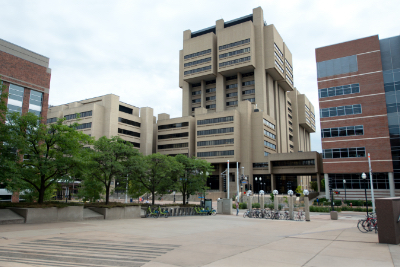
University of Minnesota School of Dentistry
University of Minnesota
School Information
Mission Statement
The University of Minnesota School of Dentistry advances health through scientific discovery, innovative education and the highest-quality care for all communities.
Combined Degree Programs
- DDS/MPH
A Public Health Dentistry dual degree that allows transfer of up to 14 credits from the DDS program, offered in collaboration with the School of Public Health.
- DDS/PhD
The Dentist-Scientist Training Program prepares students for careers in academia and research, combining the DDS with a PhD in Oral Biology.
- BSDH/MDT
A dual degree program for Bachelor of Science in Dental Hygiene and Master of Dental Therapy.
International Student Programs
Other Paths:
- International Dentist Fellows - A program for non-U.S. citizen dentists to pursue basic science research training through a PhD program or postdoctoral appointment.
Degree Requirements
Coursework Requirements
| Subject | Credits (Sem) | Lab Required | Min Grade |
|---|---|---|---|
| biology | 8 | Yes | C |
| general chem | 8 | Yes | C |
| organic chem | 8 | Yes | C |
| physics | 8 | Yes | C |
| english | 8 | No | C |
| biochem | 3 | No | C |
| math | 3 | No | C |
| other | 3 | No | C |
Credit Policies
Experience Requirements
Letters of Recommendation
Required Types:
- science professor (2)
- other (1)
Test Requirements
Application Logistics
Admissions Cycle
2025-2026
Mean Age
23.5
Class Size
105
GPA Statistics
Cumulative GPA
3.72
Science GPA
3.63
DAT Scores
Primary Scores
Academic Average
20.9
Total Science
20.6
PAT
20.3
Section Breakdowns
RC
21.9
Entering Class Percentile Ranges
Reported 5th, median, and 95th percentile values for the entering class. Missing points were not reported.
DAT Academic Average
Entering-class percentile
- 5th
- 18
- 50th
- 21
- 95th
- 25
Lower
Median
Upper
Cumulative GPA
Entering-class percentile
- 5th
- 3.33
- 50th
- 3.73
- 95th
- 4.00
Lower
Median
Upper
Science GPA
Entering-class percentile
- 5th
- 3.21
- 50th
- 3.66
- 95th
- 4.00
Lower
Median
Upper
Applicants & Enrollees
| Category | Applicants | Enrollees | Rate |
|---|---|---|---|
| overall | 1,419 | 105 | 7.4% |
| in state | 202 | 64 | 31.7% |
| out of_state | 995 | 35 | 3.5% |
| international | 222 | 6 | 2.7% |
| regional | - | 26 | - |
Class Composition
Out-of-State Enrollee Origins
Home states represented by enrolled students from outside the school's local state.
29 students reported
Academic Year
2025-2026
Tuition & Fees (Program Total, In-State)
$248,019
Cost by Program Year
Detailed Cost Breakdown
| Year | In-State Tuition | Out-of-State | Fees |
|---|---|---|---|
| D1 | $51,058 | $95,482 | $3,359 |
| D2 | $64,177 | $118,908 | $4,132 |
| D3 | $61,641 | $113,812 | $3,129 |
| D4 | $58,640 | $108,207 | $1,883 |
| Total (4 Years) | $235,516 | $436,409 | $12,503 |
Research Opportunities
Research Themes:
Clinical Experiences
The DDS curriculum features early clinical exposure starting in the first year (DDS 6310). Students transition to comprehensive care in the third and fourth years, with a strong emphasis on community-based outreach.
Clinical Rotations:
- Community Outreach Rotations - DDS students participate in 8-12 weeks of outreach at 21 clinical partner sites across Minnesota and beyond.
- Special Healthcare Needs Clinic - A rotation focused on providing accessible care to patients with cognitive, physical, and medical challenges.
- Introduction to Dental Clinics - D1 students complete assisting sessions to orient themselves to clinic operations, infection control, and professional demeanor.
Postdoctoral Programs
- Endodontics
- Oral and Maxillofacial Surgery
- Orthodontics
- Pediatric Dentistry
- Periodontics
- Prosthodontics
- General Practice Residency (GPR)
- Orofacial Pain
Graduate Programs
- PhD in Oral Biology
- Master of Science in Dental Hygiene
- Master of Science in Dentistry